Google launches Gemini 4 Hydrogen across Search and the Gemini app
The new model, positioned as an everyday upgrade over Gemini 3.8 Flash, is rolling out now in the Gemini app and Search; developers can use it at $1.50 for each million input tokens.
Sasha Lind, mobile software correspondent2 minute read
Photograph: Google (press image)
Google announced on Thursday that Gemini 4 Hydrogen is rolling out globally, describing the model as bringing “cutting-edge intelligence to everyone” and tuned for fast, efficient work on everyday coding and agent tasks. It is available now in the Gemini app, Search, Google AI Studio, the Gemini API, and Gemini for Business; paid Google AI Pro and Ultra subscribers also get it in Antigravity. 9to5Google reported that free Gemini app users can tap Hydrogen through Auto model selection when the system decides it is the right model for the prompt.
Google said Hydrogen costs $1.50 for every million input tokens and $7.50 for every million output tokens, with flat pricing across the full 1-million-token context window. It accepts up to 1 million output tokens and offers four thinking levels: low, medium, high as default, and a new xhigh tier. At the default high thinking level, Google says Hydrogen beats Argon on the Artificial Analysis Intelligence Index, scoring 51 against 50 and reaching 54 at xhigh. Compared with Gemini 3.8 Flash, Hydrogen finishes tasks 2.5 times faster at the high default, lifts Terminal-Bench 4.1 scores to 57% from 18.2%, and cuts fabricated claims by more than five times, according to Google.
For developers, Google describes Hydrogen as both a standalone model and an engine built to run individual tasks efficiently inside multi-model workflows. Google said the model manages issue resolution, debugging, quick iteration, and codebase Q&A, and partners observed it running 2x to 2.8x faster while using 12% to 23% fewer tokens than 3.8 Flash. Google also introduced Orchestrator in Google Antigravity, which dynamically switches between Carbon and Hydrogen in the same session; on Terminal-Bench 4.0, Google says it reached near-Carbon task success rates while consuming 24% less quota and finishing 19% faster.
A smartphone screen with a side by side comparison of Gemini 3.5 Flash and Gemini 4 Hydrogen in a search of neighborhoods in Boston Photograph: Google (press image)
On benchmark results, Google cites Hydrogen ranking #5 on Agent Arena, leading its class on HLE-Diamond at 58.8%, ranking #1 overall on Vals Tax Agent Bench at 52.3%, tying for #1 on Vals Legal Research Bench at 55.8%, and leading its class on AutomationBench-AA. It also scores 53.4% on Multimodal Knowledge Agent and 71.6% on Agents’ Last Exam v1.1, according to Google.
In the Gemini app, the model picker lists 4 Hydrogen as “Everyday help,” while free users get access through Auto selection when it fits the request. Google says Hydrogen sticks to your tone, format, and instructions better, with study guides, email drafts, rewritten text, and documents ready on the first attempt, and it calls the right tools more often when a task begins. Google’s Search team said the model is now available globally in Search for all users, bringing better understanding of intent, more visual responses, and a wider range of relevant links. 9to5Google reported that Hydrogen serves as the default model for AI Mode and powers the hardest questions in AI Overviews.
A smartphone screen with a side by side comparison of Gemini 3.5 Flash and Gemini 4 Hydrogen in a search for sneakers Photograph: Google (press image)
Google also highlighted safety improvements. The company said Hydrogen curbs agent overreach by as much as 81% and under-service by as much as 79%, lowers misaligned actions and task shortcutting by 12x, and is up to 2x less likely to cross permission lines when a task is impossible or blocked. It preserves 99.9% chain-of-thought legibility and is more than 2.3x more resilient against indirect prompt injection attacks on the Gray Swan IPI benchmark.
Google says the rollout begins today across all of those surfaces.
The exploit, dubbed worse_query, lets a malicious app read other apps' local files. Sideloaded apps are the main vector, and Apple has not confirmed a fix.
Users worldwide cannot access Outlook email through apps or the web, and other Microsoft 365 services including Teams and SharePoint are also down. Microsoft says recovery is progressing but has not given a full restoration time.
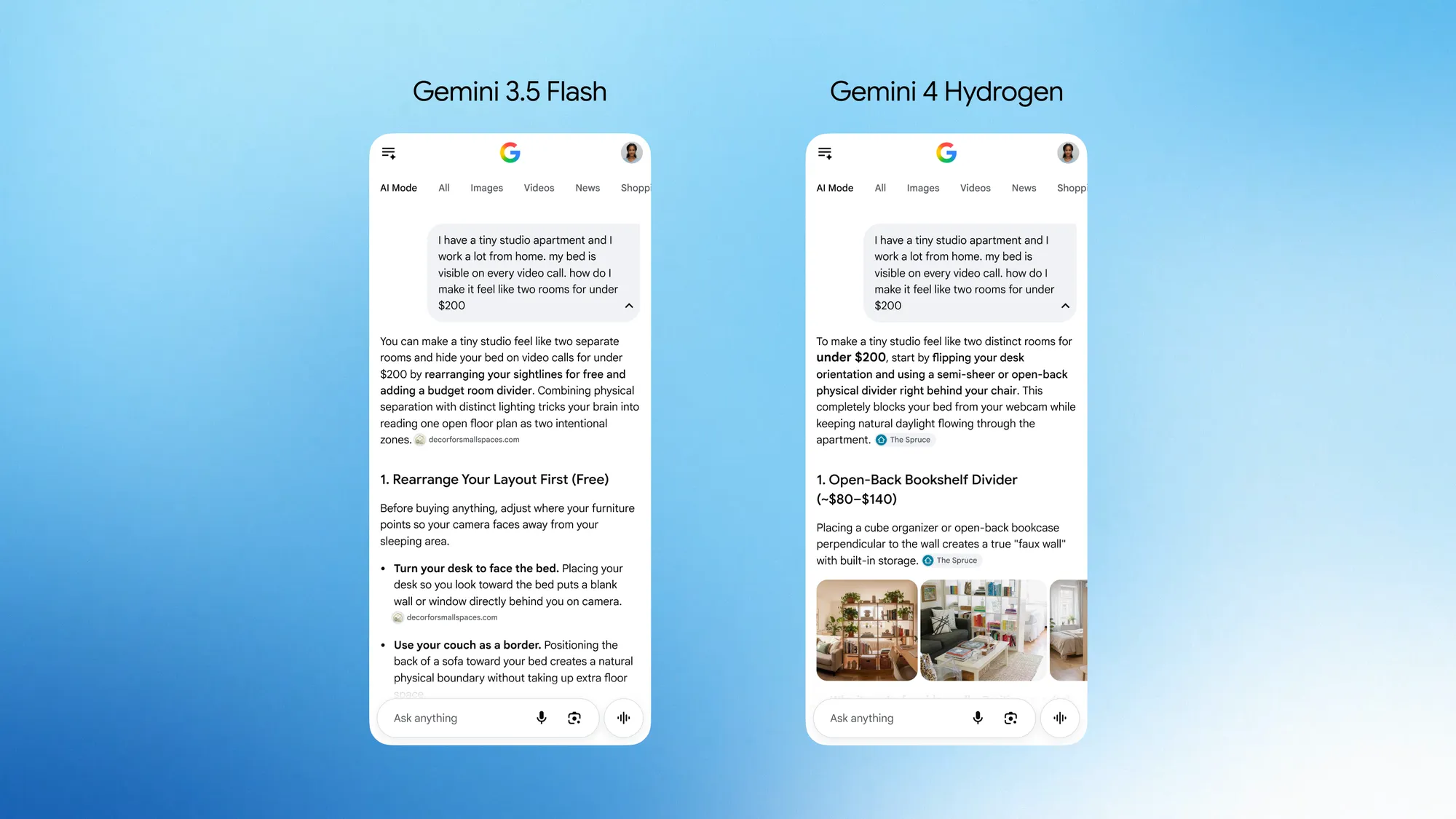
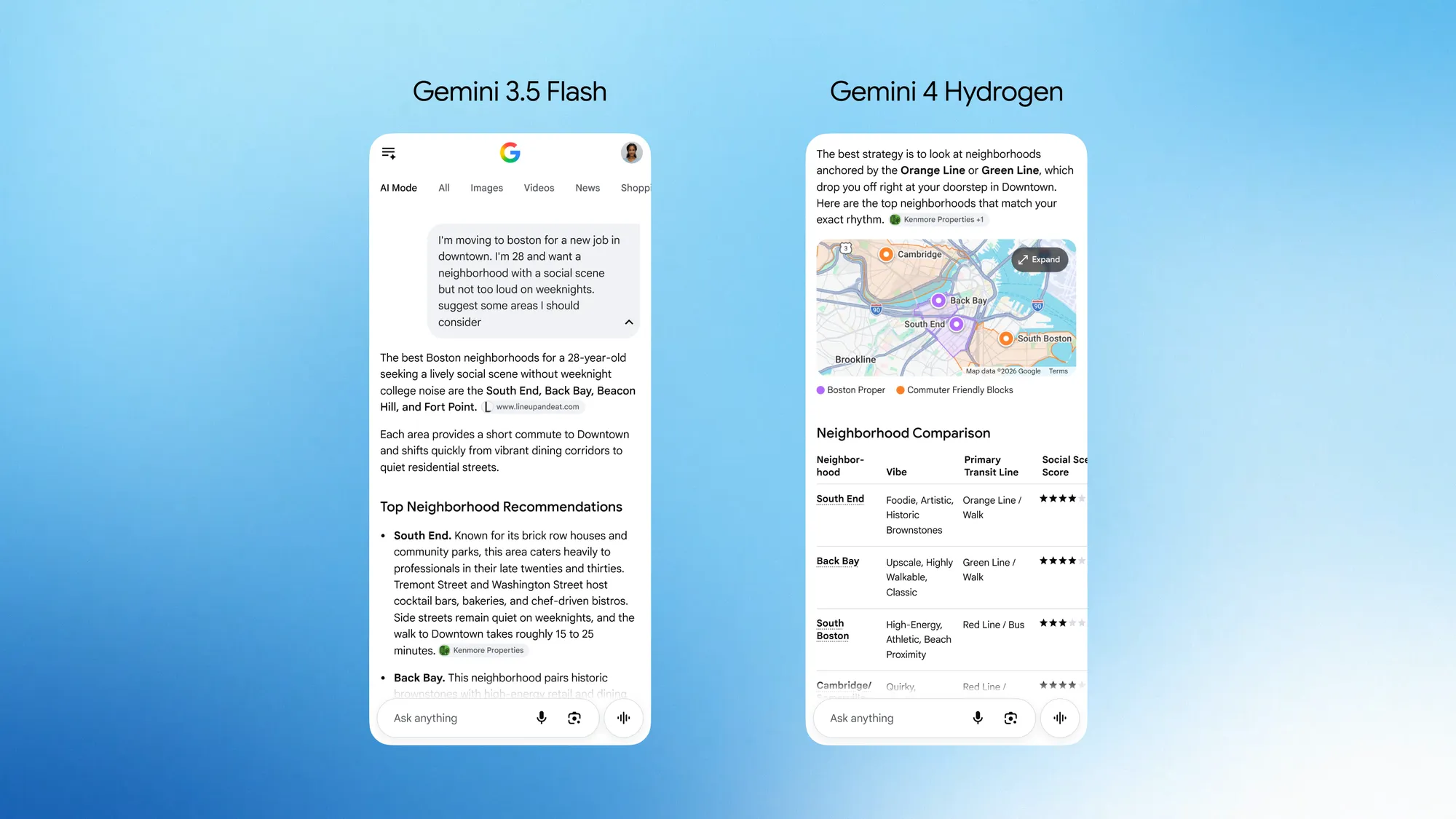
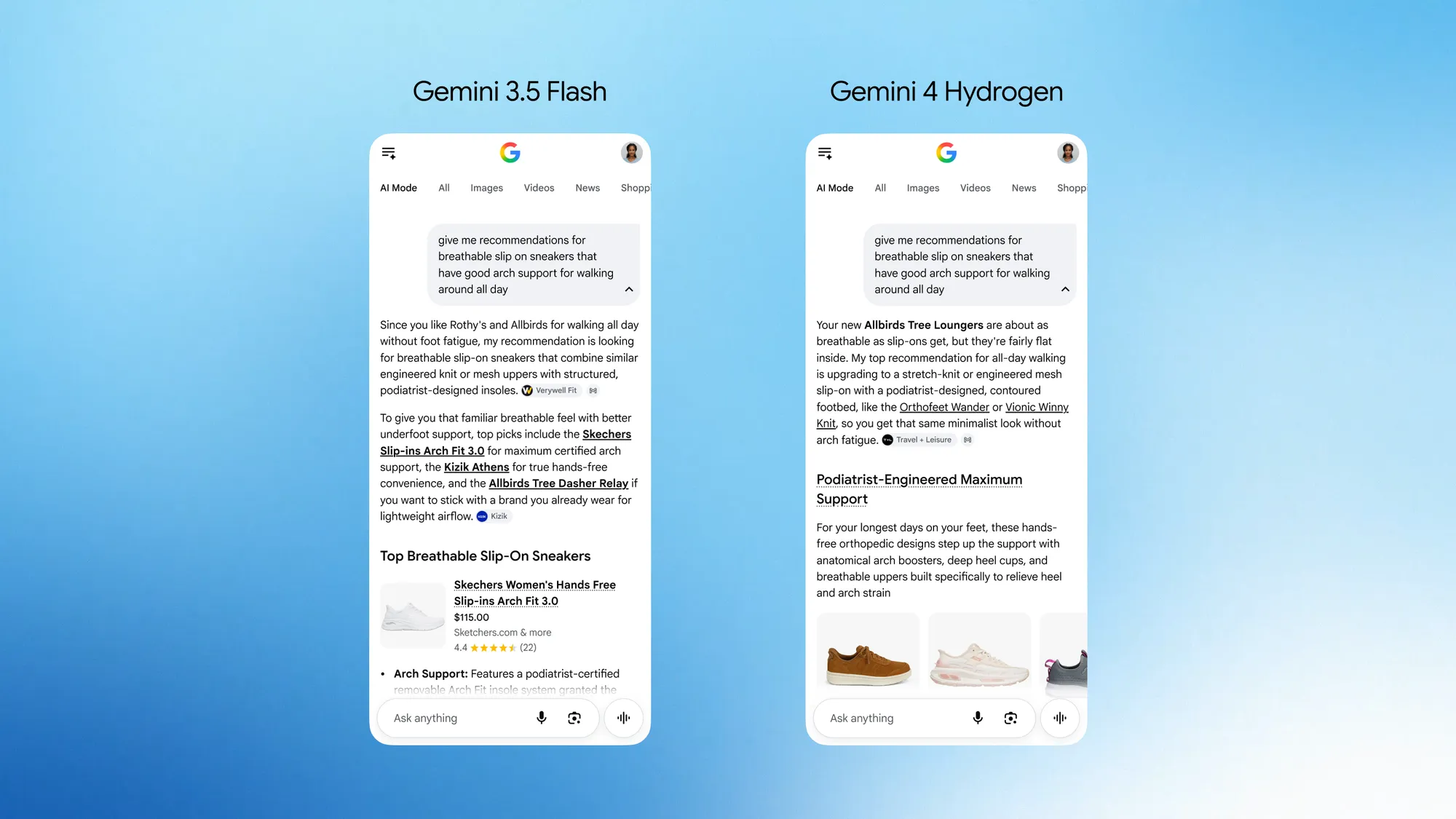





 Illustration: Gadgetry